Are you ready for Business Data Analytics?

Introduction

If we look around us we see many large companies that were Industry leader a couple of decades back have faded into history. To name a few – Xerox, Dunlop, NOKIA, Hindustan Motors, Premier Automobiles. It is important to know what went wrong with these companies. In September 2013, NOKIA announced that they had been acquired by Microsoft in a deal valued at $7.17 billion. At the time, Nokia’s CEO, Stephen Elop ended his speech with the following words, “We didn’t do anything wrong, but somehow, we lost.”  His statement is a typical one of many erstwhile excellent companies. Technically these successful companies did the right things to be what they were. Once successful they continue to do the things that made them successful and fail to notice the changed environment and customer preferences, till one day their competitors do the right things and surpasses them.

In early days, prior to globalization and internet running a business was like sailing a ship. The captain of the ship set the direction, conducted periodic review and took action for mid-course correction. In the present era of rapid information exchange and global competition running a business has changed from isolated sailing to more like driving in a busy road. Only vision and direction are not enough to run a successful business. One need to get continuous feedback of changes that are happening and be agile to make quick correction.

Business Analytics give us this visibility to know about our business transparently and quickly. It assimilates information from outside agencies, our own operations and compares them with our business plans to provide timely actionable information in the way it is easy to comprehend and act.

What is Data Analytics

Business Data Analytics is the science of examining data about business operations, customers and its environment to derive some knowledge that help to make better decisions. Many people tend to mix-up Data Analytics with Data Mining. It is often easy to mistake one for another.

Many of the techniques and underlying technology between Analytics and Data Mining are common but one must remember the focus of two are entirely different. Data Mining is focused at discovering  new relationship between data. Business analytics on the other hand aims at making better business decision. Discovering new relationship is not the focus of Analytics.

Data Analytics aims at collecting, cleaning, transforming, harmonizing data from different sources and using them in mathematical models to derive useful information, support conclusions and support decision making process. Data Analysis has many different facets and diverse techniques that find use in different business, science, technology and social domains.
Different types of Analytics

Data Analytics can be broadly divided into exploratory data analysis (EDA), where new properties of data is discovered and confirmatory data analysis (CDA), where existing decision hypotheses are proven true or false. There is another branch of analyzing qualitative data (QDA) that deals with non-numerical data. QDA is used in the areas of social sciences, cognitive computing like pattern recognition, gesture analysis, defect detection etc.

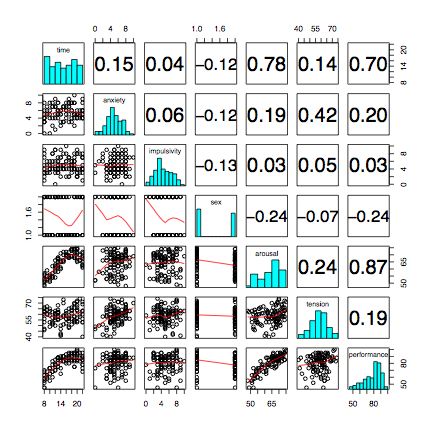
Exploratory Analysis involves extracting various properties of data and its relationship with other data elements. Typical example of EDA involves regression analysis, time series analysis etc. to reveal underlying trends in the data, cluster analysis to identify groups of data, Box plot to interpret trend of mean value and its variation, histogram to understand how data is dispersed. Sometimes exploratory analysis is used in conjunction with data transformation to modify and view it from different perspective.

Exploratory analysis tell us new details of our business that may have been hidden from our view. For example exploratory study may show us some new market segment that are not yet tapped by competition. It may show us reduced business from a segment of customers, which may have been neglected by simple charts.  Exploratory analysis may help us to predict result of our business decisions. It may show us additional profit that can be made by some capacity expansion or by adding new product.

Confirmatory Analysis is used to confirm business decisions and optionally evaluate risk of wrong decision. CDA is used in medical industry to establish efficacy of a treatment. It is at times used to check effectiveness of some business policy, verify authenticity of transaction, establish authorship of documents, selecting best policy from different conflicting choices. Decide process parameters to improve its performance and such things. Some example of CDA are use of cash incentive for family planning, use of speed breaker to prevent accident, decide amount of spice to use in a snack.

If you are using any social networking site then you are probably aware of QDA. Most social networking sites use QDA to find friend of your friends and can flag the relationship. These sites also perform a text analysis of your comments and writing and target advertisements based on keywords that you used. QDA can be used in similar way to find out about your end customers, competitors. One can purchase data from various stores and market research agencies to gather further intelligence about price movements at various markets or change of market segments.

Steps of Data Analysis

Most data analysis goes through very standard steps. These are:

1. Data Acquisition: Data for most analysis comes from various sources. Some data may come from data base, some may be transferred over internet using XML format, some data may need to be retrieved from website and some data data may be available as text files. All these data needs to be acquired and brought into purview of analysis.
2. Data Cleansing: Once the data is acquired it needs to be checked for accuracy. Some junk data may get bundled with the main data. These junk data need to be filtered. Some data correction may need to be made before the data is taken for further processing.

3. Harmonizing: In this step data from various sources are merged together. Certain amount of transformation may take place at this stage to accommodate for different international standard of decimal, date and currency.

4. Transformation: Once the data is ready for analysis, usually the first step is to transform the data to make it ready for analysis. Transformation may involve extracting statistical information like average and variance. It may involve using some mathematical transformation, aggregation, comparison etc.

5. Staging: After transformation data for analysis is normally stored into staging layer. Staging layer often use special storage technology like columnar storage like SAP/HANA, in-memory data base, high performance file system (like HADOOP). These storage techniques makes it easy for us to use the data in multidimensional query, perform complex analysis over relatively large amount of data.

6. Visualization / Reporting: Visualization layer is what we normally see in data analysis. These tools make it possible to display result of data analysis in attractive and easy to comprehend manner. Some of the reports may be stored in pre-calculated form, while some other may be distributed by e-mail. In some specific cases the data maybe used to trigger some automated process, like ordering material or make one changes in process parameters.

Why Analytics is important

Data Analytics is used by Travel and Hospitality industry to know about customer preferences, predict demand reach out to target market. Retail industry uses it to predict product demand, manage their inventories, decide on product pricing, keep track of customers buying habits, manage their loyalty programs, keep track of market trends. Health-care industries use analytics to keep track of their patent records, health plans, insurance plans, plan their capacity and schedule their resources. Manufacturing industry uses it to track supplier performance, monitor their supply chain, monitor quality, reduce costs and find opportunities of new product. Agro industries uses analytics find price trends in different market, gather knowledge about end customers, keep track of crop growth, analyze performance of different seeds, fertilizers and other inputs.

There is no industry that do not benefit from better knowledge and insight that are based on real data. The days of depending on only personal opinion and hunches are over. Today every one is using data driven decision making. In the world of analysis, there is a place for personal wisdom. These are used to form decision rules and hypothesis that form the basis of CDA. Analytics add value to these wisdom by checking effectiveness of these hunches with actual data and show if the decision will real benefit. CDA makes personal wisdom robust by flagging the good decisions and not so good ones.

Business Benefit of Analytics

Most companies generate lot of data that lies in their files and hard disks underutilized. Data analytics helps organizations to use their data to identify new opportunities. Such analysis makes it possible to make smarter business moves, more efficient operations, higher profits and happier customers. People have found from the studies in companies that already uses Data Analytics to understand how they used it. They found the companies got benefit in the following ways:

Cost reduction:

Big data technologies such as Hadoop and cloud-based analytics bring significant cost advantages when it comes to storing large amounts of data – plus they can identify more efficient ways of doing business.

Faster, better decision making: 

With the speed of Hadoop and in-memory analytics, combined with the ability to analyze new sources of data, businesses are able to analyze information immediately – and make decisions based on what they’ve learned.

New products and services:

With the ability to gauge customer needs and satisfaction through analytics comes the power to give customers what they want. Davenport points out that with big data analytics, more companies are creating new products to meet customers’ needs.

Matching reporting with users

One can make excellent analysis and beautiful reports but if these reports are not actually used for decision making then it is of no use. To be useful data analytics needs to be presented in correct format, time and in correct medium.

For example, IT department of a big real estate industry made a report to show flats availability across multiple projects and cities. Technically the report was excellent and very useful, but it was not being used. The persons who will use the reports, the real estate agents are out in the field, meeting prospective clients. They did not have the data readily available with them. When the same report was made available in a mobile platform, it become a much loved tool. The agents could use the report to tell customers availability of flats at different cities that meet their liking in terms of locality, floor, size and budget. They could also book these on-line sitting at the field office.

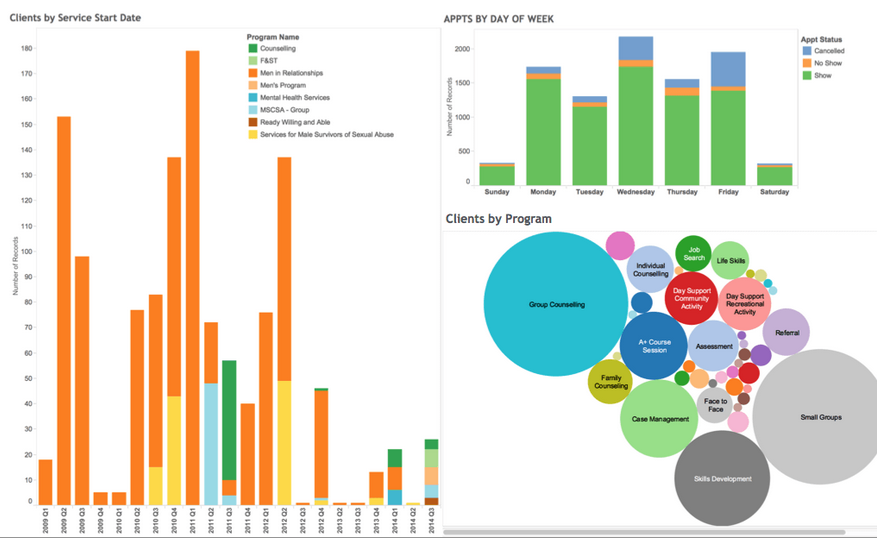
Similarly, users have their preference for consuming the information in tabular data format or in graphical form. Some users like the graphs simple with one graph in a page, some love to have them together in a dashboard like presentation. One has to take into consideration of the user profile, their background and environment where the report is being used. Presentation of analytics report play an equally important role as data crunching part.

How to deploy Analytics reports

With the technological advancement, today there are number of choices to make reports available to final decision maker. We can make the reports available on mobile platforms, show it on terminal, display it on electronic boards or send it as email. Choices are many. Each platform requires the report to be formatted in certain way.  Each technology has its advantages and disadvantages. One has to choose the technology judiciously to disseminate reports.

Best Practices for Data Analytics

One must remember that analytics do not run the business. It provides important information to aid decision making process. Very often people make the mistake of referring too many parameters. With automated reporting it is quite easy to err on the wrong side.  Making decision that are based on too many reports is like driving a car with dash board full of instrument clusters. Such approach blurs our focus and confuse us.

Successful Analytics implementation will devote lot of effort in selecting a handful key performance indicators that have clear and direct relationship with the organizational strategy. These KPIs are then owned by responsible members of the board. To support the KPI some auxiliary indicators are identified. Organization will use these KPIs to monitor progress and get feedback on the progress.

Other data that have no relation to organizational strategy will be used to explore for future opportunities but never be allowed to meddle with main executive dashboard. In large organization main KPI maybe

broken up into a set of smaller KPI that form the main focus of different branches of the organization. Such breakup may happen by functional, regional or product group-wise. The dynamics of distributing the main KPI into sub-targets is based on the way organization operates. When such sub-division of KPI is made analytic report needs to get tuned to report figures in the same line. When strategy and data analysis are in harmony the organization gets best benefit.

Posted in Analytics | Leave a comment

Laxmi to Narsi, Palam with directed path

I joined IT-BHU (now IIT-BHU) in 1979. It was my first time in a hostel. We met so many new faces of nearly same age group. Most of us was worried with uncertainties of facing a new place, new environment and that dreaded feeling of “ragging”. With all these tensions around I found one guy was ever smiling. That was Laxmi.
Laxmi was ever helpful. In third year we had computer. It was our first experience in typing on qwerty keyboard. Laxmi knew typing and he helped me to pick up touch typing so that it was easy to interact with computer.

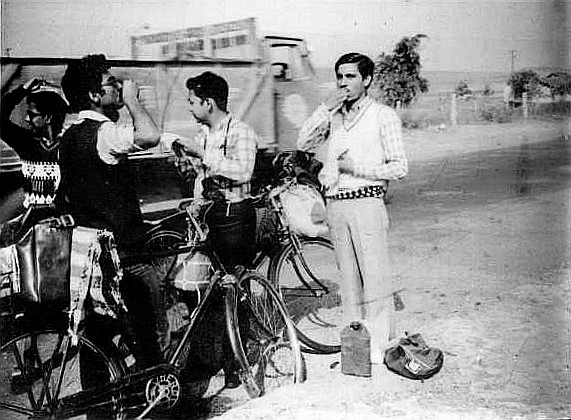
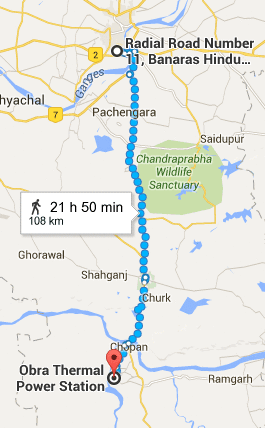
That year we had a rather short winter vacation and I did not go home. Laxmi also did not go home. On Dec 25th we discovered that most hostels are deserted. Life suddenly felt very dull sitting quietly in the deserted campus. We got a brainwave to go to Obra on bike. Fortunately that was not the age of internet, and we did not have many sites to consult and contemplate. The distance of 110 Km looked achievable. We packed our bags, took a bicycle pump for insurance and paddled our way to Obra. We took a decision on spurt of a moment, did not realize that near the end of our journey, we shall have to bike up the hill. There were five of us – Ashish, Sakil, Laxmi, Wahati and me. We faced the challenge but somehow made it to Obra by evening.

The journey was memorable. Biking such long distance and on hilly road had its own thrill. View around was fantastic. What eye saw compensated the pain we had on our legs. We spent couple of days in Obra and then returned on 31st.

Now after thirty odd years, most of the photographs that we took on the way have gone. Only a few prints remain, but the memories remain fresh.

Later in the next semester both Laxmi and I took Operations Research as electives. There were only a few students in that class. We used to clear each others doubts, in the process we become close friends.  In final year all of us shifted to new hostel. Laxmi was one of the first batch of students to reach hostel that year. He had reserved two rooms beside his for me and Srini, who was also very close friend during my college days. While returning both of them visited my house in Kolkata. That was last we saw. 

Laxmi went to do his PhD in USA, I went for my PG in NITIE. During the student days we used to write often. Sometime for some books he wanted to be shipped from India. Some time, when chatting and skype became an option we had long discussion over influence of philosophy over scientific thinking. It was through such discussion I developed an awareness of of duality concept that graeco-roman scientists tend to follow and most of us follow the same line of reasoning unquestioningly and its difference with oriental pluralistic systemic thought process. After his PhD and few years of teaching, Laxmi was bitten by the entrepreneurial bug and floated his first company – OHMS: Optimization & Heuristics Management Solutions Inc. He was very thrilled with the new venture and sent me his visiting card. During Dot-Com boom OHMS did good business by advising new companies on algorithms. As the bubble burst, so did OHMS. Laxmi was very fond of OR and maths. When e-mails became popular and came to India, he was one of the first one to send me an e-mail. His id was orpi@cmil.com; orpi was combination of OR and Pi (representing Maths). 

After OHMS, Laxmi floated many companies. Palam was one of the successful one that rode on the outsourcing wave. Palam acted as quality and delivery agent for many Indian companies, in the process it helped quite a few Indian companies to reach out to US market. Laxmi preferred the business model of taking share of company and being on board for the companies he helped to expand in US. Over the years Laxmi became board members in quite a large number of companies. During this time he preferred to be called as Narsi, which was short of his family name. Thus S Laxmi Narasimhan metamorphosed into Narsi. 

During this time I also saw him develop a strong passion for community work. He was very passionate about the Swaminarayan Temple of Atlanta and loved to accompany visiting Indian celebrities. He used to be a shy person during his student days, but we saw him change to a heavily networked person and become founder of Indian Professionals Network (IPN). Whatever Narsi did, he will drop in a link or share the news clip. Like his getting elected as  chairman of the Georgia Indo-American Chamber of Commerce or his photo being published in local newspaper.  Narsi was a co-traveller who took the road I did not take but we had a bridge (“palam” in Tamil as he explained it to me) that remained between us.  But then Narsi crossed a bridge that has no return path. A directed graph as Narsi would probably have like to call it. On 2nd May, 2016 I was in Pune. I was not reading the mails regularly. Suddenly I got a mail with this shocking news that Narsi has passed away after a massive heart attack on Apr, 29th in his apartment. This is a news that took a long time to register and will take a long time to digest. We will all cross the bridge that Narsi crossed at some point in time but this time he could not share the news.  This news brings association to a song that keeps buzzing in my head, let me share it with you all — 

Posted in BHU, My Life | Leave a comment

Spatial reporting with R

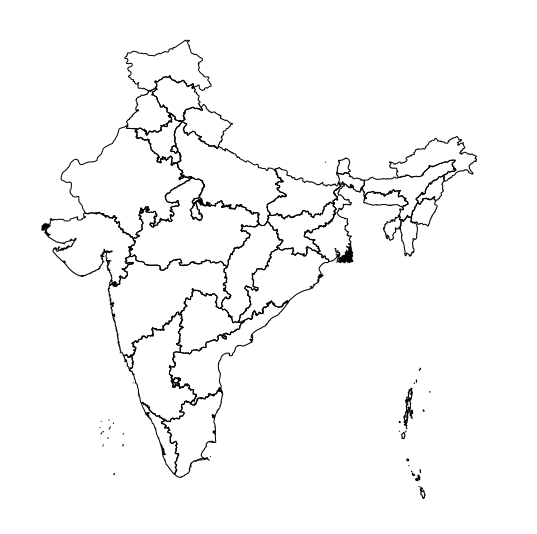
Many times we need to plot geo-spatial data in analytics. Information like sales per region, income distribution makes more sense when they are plotted on a map. We can do this quite easily in
R. Let us see it in action.

First of we need data about the map. There are many libraries from where we can download this data
for our personal use. Here we will use data from http://gadm.org/  Here there are data at different levels of details available for most countries. Let us use data for India. To load this downloaded data into R, first open R in R-Commander and change your working directory to where you saved the file

setwd(“/home/soumyanath/Downloads/R_Maps”)
and then read the data into a variable with

ind1 <- readRDS(“IND_adm1.rds”)

Let us check what kind of data has been loaded with

class(ind1)

It will show

[1] “SpatialPolygonsDataFrame”
attr(,”package”)
[1] “sp”

As it is SpatialPolygon, let us load library(sp)

library(sp, pos=4)
library(methods, pos=4)

Now, the question is, how do we see this data? There is a function to plot spatial data, we use that

spplot(ind1, “NAME_1″, scales=list(draw=T), colorkey=F, main=”India”)

will show a map. Actually I do not like it, it shows a truncated view of Kashmir, but then we are

using data from an USA repository and I have no means to influence them. We shall revisit this part at a later stage on how to correct the maps, but for now, let us make use of what we have. To manipulate data we need to know properties of the data that we have. We can look into the loaded data with names function. It shows:

> names(ind1)
 [1] “OBJECTID”  “ID_0”      “ISO”       “NAME_0”    “ID_1”      “NAME_1”    “HASC_1”    “CCN_1”     “CCA_1”    
[10] “TYPE_1”    “ENGTYPE_1” “NL_NAME_1” “VARNAME_1”

We can also check property of the data by using

summary(ind1)
This will show various properties of data loaded. Right now we are interested in knowing ID for the states so that we can use it to color the maps with our data. We can user print(ind1) to view complete data, but in this case it will be a huge print. In this example we will use state ID “HASC_1” to plot our data. We can see the values with:

print(ind1$HASC_1)

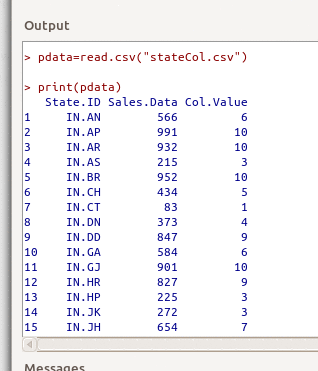
Right now we do not have any data so we populate a excel sheet and fill data with state ID, fill some sales data and assign a color value based on sales amount. In reality we will probably use a data base to get this data. We save data into csv format and read it in R by:

pdata = read.csv(“filename”)

confirm data has been read correctly
We add a new property color.data into the dataframe ind1 based on color values taken from csv file

ind1$color.data =pdata[pdata[1]==ind1$HASC_1,3]

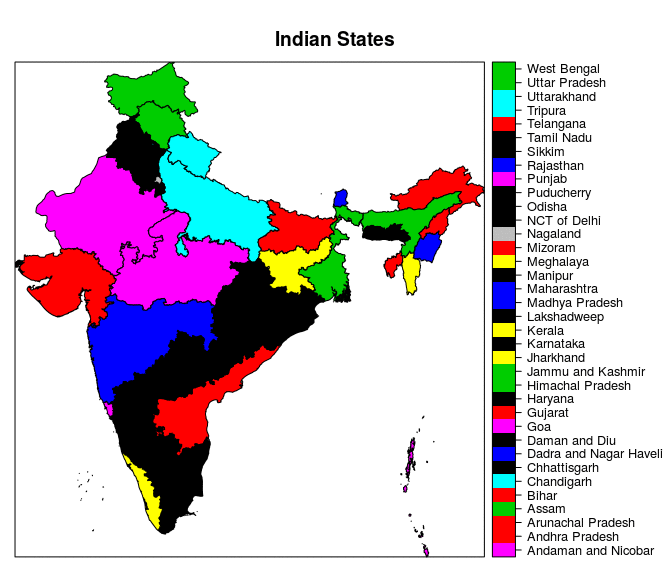
Now we plot the map with these color. The command is

spplot(ind1,”NAME_1″,  col.regions=ind1$color.data, colorkey=T, main=”Indian States”)

We have the result here

Same concept can be extended to district level for more granular analysis.

In our next blog, we shall see how to link this map projection with database to get real time analysis

Posted in Analytics, R, spatial data | Leave a comment

Flower Cycling options

Today in the news feed I saw a news that I thought I shall dwell a bit. The news was about a new venture setup by two friends Ankit Agrawal and Karan Rastogi. They are from a place that is pretty close to my heart — Kanpur.  The city is one of the typical polluted industrial city that has grownup organically without much planning. But what these guys did is commendable.

These friends realized that our religious minded people do not like to dump flowers in garbage. They would dispose these flowers in river. The flowers, approximately 80, 00,000 tons  that gets dumped in rivers cause enormous pollution. They have setup a venture to collect these flowers and use vermi-culture to convert it into good organic fertilizer.

It is a novel idea, but I would say it is also a waste of sorts. Flower has many things that we value – smell and color are two most visible thing in flower. Dried and grounded flower powder is often used as gulal that we use during holi. Essential oil from flower can be extracted by many different methods, like:

  • Enfleurage
  • Expressed Oils
  • Steam Distillation
  • Solvent Extraction
  • Fractional Distillation and Percolation
  • Carbon Dioxide Extraction
  • Phytonic Process
More details about it can be found in Nan Martin’s blog.
As we have a huge stock of flower, extracting this oil could lead to substantial increase in our GDP. After extracting the oil we may use the flower for making organic dye, that can be used in our textile and other cottage industries, part of it can also be used to make organic gulal. Only after we have actually extracted the usable parts, we should feed the rest to worms. Worms do not need the perfume and color, we do. 
Recycling is good but making full use of the potential is better. 
Posted in Art of living, Environment | Leave a comment

আমাদের প্রথম প্রোগ্রাম

PIC Programmer
মাইক্রোকন্ট্রোলারে কিছু কাজ করতে গেলে সেটাকে প্রোগ্রাম করতে হয়। প্রোগ্রাম আসলে একটা নির্দেশ এর তালিকা যা μC কে চালায়। μC খুব ছোট বলে এই প্রোগ্রামটা আমরা বাইরে, মানে ল্যাপটপে বা ডেস্কটপ কম্প্যুটারে করে সেটা μC তে লিখে দি।  পাশে এই রকম একটা প্রোগ্রাম লেখার যন্ত্র দেখছ। এতে  μC র ICটা বসাতে হয় আর কম্প্যুটারের USB পোর্ট থেকে প্রোগ্রাম μCতে লেখা হয়। এই প্রোগ্রামার Amazon.com বা নানা রকম ইলেক্ট্রনিক্স সামগ্রীর দোকানে পাওয়া যায়, দাম ১০০০ টাকা। যখন আমরা নতুন কিছু তৈরী করতে গেলে আমাদের কখন বার বার প্রোগ্রাম পালটাতে হয়। এই দরণের প্রোগ্রামারে এটা অসুবিধা জনক। এই অসুবিধা দুর করার জন্য কিছু যন্ত্র আছে যাতে μCকে তার নিজের সার্কিটে বসিয়ে প্রোগ্রাম করা যায়। এতে μCটাকে বার বার খোলার দরকার হয় না। এই ধরনের যন্ত্রগুলোর দাম একটু বেশি, Microchip PIC  μC 
PICkit 3 In-Circuit Debuggerপ্রোগ্রাম করার জন্য এই PICKIT-3 যন্ত্রটার দাম প্রায় ৫০০০ টাকা পড়ে যাবে। এই ইনসার্কিট প্রোগ্রামার শুধু প্রোগ্রাম লেখা ছাড়া আরও নানা রকম কাজে ব্যবহার করা হয়। তবে প্রত্যেক μC তাদের নিজের প্রোগ্রামার বার করে। যারা μC নিয়ে অনেক কাজ করবে তাদের জন্য এই খরচা করা ছাড়া আর কোন উপায় নেই।


 তবে এই খরচাটা একবার শুধু লাগে, μC  দাম খুব একটা বেশী নয়। ১৫০ – ৪৫০ টাকাতে বেশীরভাগ μC পাওয়া যায়। শেখার জন্য বা একটা দুটো কাজ করার জন্য আমরা কিছু  μC ডেভালাপমেন্ত যন্ত্র ব্যবহার করতে পারি। এগুলোতে প্রোগ্রাম লেখার ব্যবস্থা করা থাকে। এই রকম একটা যন্ত্র Arduino Uno এতে মুল কম্প্যুটার থেকে প্রোগ্রাম μC পাঠাবার ব্যবস্থা করা আছে আর দামটাও খুব একটা বেশী নয়। আমি এই রকম একটা যন্ত্র এই ব্লগটা লেখার জন্য Amazon.com থেকে কিনলাম, দাম পড়ল ৪৫০ টাকা।
Arduino কম্পানি মুক্ত প্রোগ্রামে বিশ্বাস করে। এর নানা প্রোগ্রাম আমরা নিজেদের মধ্যে আদান প্রদান করতে পারি। এই μC জন্য প্রোগ্রাম লেখার যাবতীয় প্রোগ্রাম আমরা https://www.arduino.cc/en/Main/Software থেকে পেতে পারি। এর জন্য কোন দাম লাগে না। আমি এখান থেকে এর প্রোগ্রামটা নিজের কম্প্যুটারে install করলাম।
ide
Arduinoর প্রোগ্রামকে sketch বলে। File menuতে কিছু উধাহ্ররন দেওয়া আছে। তার মধ্যে একটা খুব সহজ প্রোগ্রাম আমি নিলাম। এই প্রোগ্রামটা C তে লেখা।
/*
Blink
Turns on an LED on for one second, then off for one second, repeatedly.

This example code is in the public domain.
*/

// Pin 13 has an LED connected on most Arduino boards.
// give it a name:
int led = 13;
// the setup routine runs once when you press reset:
void setup() {
// initialize the digital pin as an output.
pinMode(led, OUTPUT);
}
// the loop routine runs over and over again forever:
void loop() {
digitalWrite(led, HIGH); // turn the LED on (HIGH is the voltage level)
delay(300); // wait for a 0.3 second
digitalWrite(led, LOW); // turn the LED off by making the voltage LOW
delay(300); // wait for a 0.3 second
}
 
sketchএর দুটো ভাগ – setup আর loop। setup প্রোগ্রামটা μC তে পাওয়ার দেবার সঙ্গে সঙ্গে চলে, এর পরে loop প্রোগ্রামটা চলতে থাকে। μCর প্রোগ্রাম সবসময় চলতে হয়, প্রোগ্রাম না চললে µC থেমে যাবে। 
setupএ আমরা µC পিন গুলো কি করবে তা ঠিক করি।   পিন  ১৩ তে একটা LED দেওয়া আছে। তাই আমরা সেটা জালা নেবা করে আমাদের প্রথম প্রোগ্রাম লিখব।
pinMode(led, OUTPUT); বলে যে পিন ১৩, যেটা আগে ledতে সেট করেছি, সেটাকে output হিসাবে ব্যবহার করতে। loop প্রোগ্রাম বার বার চলতে থাকে। এখানে আমরা ledকে একবার জ্বালাচ্ছি তারপর ৩০০ মিলি সেকেন্ড পরে ওটাকে নেবাচ্ছি। এই প্রোগ্রামটা লিখে আমরা IDE menu File>Upload করে Arduinoতে পাঠিয়ে দিলাম। এখন led জলা নেবা করছে।
20160130_123356
Posted in automation, robotics | Leave a comment

মাইক্রোকন্ট্রোলার কী?

মাইক্রোকন্ট্রোলার একটি ছোট্ট কম্পুটার। এটা একটা ইলেক্ট্রনিক IC হিসেবে পাওয়া যায়। অন্য কম্পুটারের মত এতে প্রসেসর কোর, মেমরি, এবং প্রোগ্রামেবল ইনপুট / আউটপুট যন্ত্রানুষঙ্গ এতে থাকে।  মাইক্রোকন্ট্রোলার অটোমোবাইল ইঞ্জিন নিয়ন্ত্রণ সিস্টেম,  ডাক্তারির যন্ত্রপাতি, রিমোট কন্ট্রোল, অফিসের মেশিন, যন্ত্রপাতি, শক্তি সরঞ্জাম, খেলনা ও অন্যান্য নানারকমের  স্বয়ংক্রিয়  ডিভাইসে ব্যবহার করা হয়। একটা  microprocessor, মেমরি, এবং ইনপুট / আউটপুট ডিভাইস ব্যবহার করে  পুরনো দিনের ইলেক্ট্রনিসের যন্ত্রের তুলনায় আয়তন এবং খরচ কমিয়ে দেয়। এই জন্য আজকাল মাইক্রোকন্ট্রোলারের ব্যবহার  লাভজনক হয়ে পড়েছে।

বড় মাইক্রোকন্ট্রোলার 

খুব ছোট মাইক্রোকন্ট্রোলার

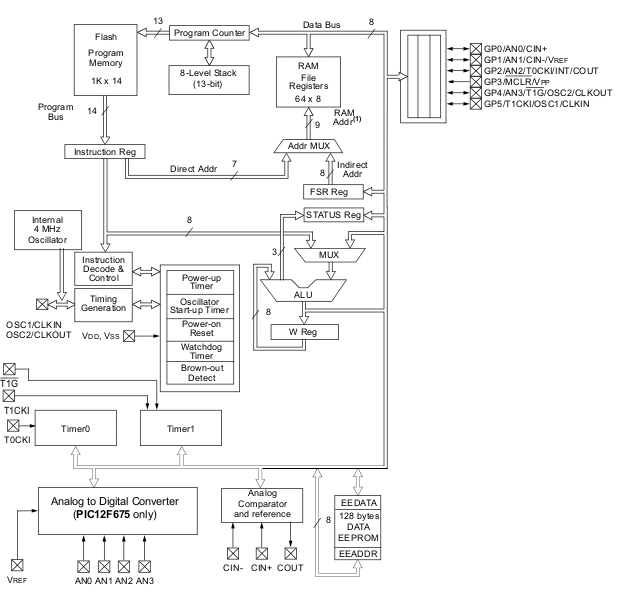
মাইক্রোকন্ট্রোলার একটি প্রসেসর, মেমরি এবং যন্ত্রানুষঙ্গ সঙ্গে একটি স্বয়ংসম্পূর্ণ সিস্টেম বলা যেতে পারে। এটাতে সাধারণভাবে, একটা  সেন্ট্রাল প্রসেসিং ইউনিট থাকে। খুব জটিল 32-বিট বা 64 বিট প্রসেসর থেকে ছোট এবং সহজ 4-বিট প্রসেসর ব্যবহার হয়ে থাকে। ছোটো তথ্য সংগ্রহের জন্য কিছু পরিমাণ  RAM আর প্রোগ্রাম রাখার জন্য রম, ইপিআরওএম, EEPROM অথবা ফ্ল্যাশ মেমরি থাকে। আর থাকে তথ্য আদান প্রদানের জন্য পোর্ট — সিরিয়াল পোর্ট হিসেবে সিরিয়াল ইনপুট / আউটপুট (UARTs) সিস্টেম ইন্টারকানেক্ট জন্য I²C, সিরিয়াল পেরিফেরাল ইন্টারফেস এবং কন্ট্রোলার এরিয়া নেটওয়ার্ক মত অন্যান্য সিরিয়াল যোগাযোগ ইন্টারফেস। এছাড়া থাকে  টাইমার, ইভেন্ট কাউন্টার, PWM জেনারেটর, এবং পাহরাদার হিসেবে কিছু যন্ত্রানুষঙ্গ, অনেক এনালগ টু ডিজিটাল কনভার্টার, কিছু ডিজিটাল টু এনালগ কনভার্টার।

মাইক্রোকন্ট্রোলারের ভেতরের যন্ত্র 

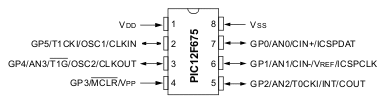
এত কিছু জিনিস থাকার জন্য বেশীরভাগ সময় এর পিন গুলো একের বেশি কাজে ব্যবহার করা হয়ে থাকে। দেখা যাক এই IC টাকে :-

এই IC টা ব্যবহার করে আমরা নানা রকমের জিনিস বানাতে পারি। সেটা আমরা এর পরের লেখায় দেখব। 

Posted in automation, Electronics, Uncategorized | Leave a comment

Retreat to Kolkata

After month long stay at Auroville I realized that it is not the place of my Karmabhumi.
We decided to move on.
Call of Pondicherry beach was alluring. We decided to spend a couple of days at Pondicherry.
This was also to correct our partiality towards Auroville. I had spent lot of time for Auroville
but never interacted earlier with Shri Aurobindo Society.  My stay at Pondicherry was to correct
 that anomaly. 
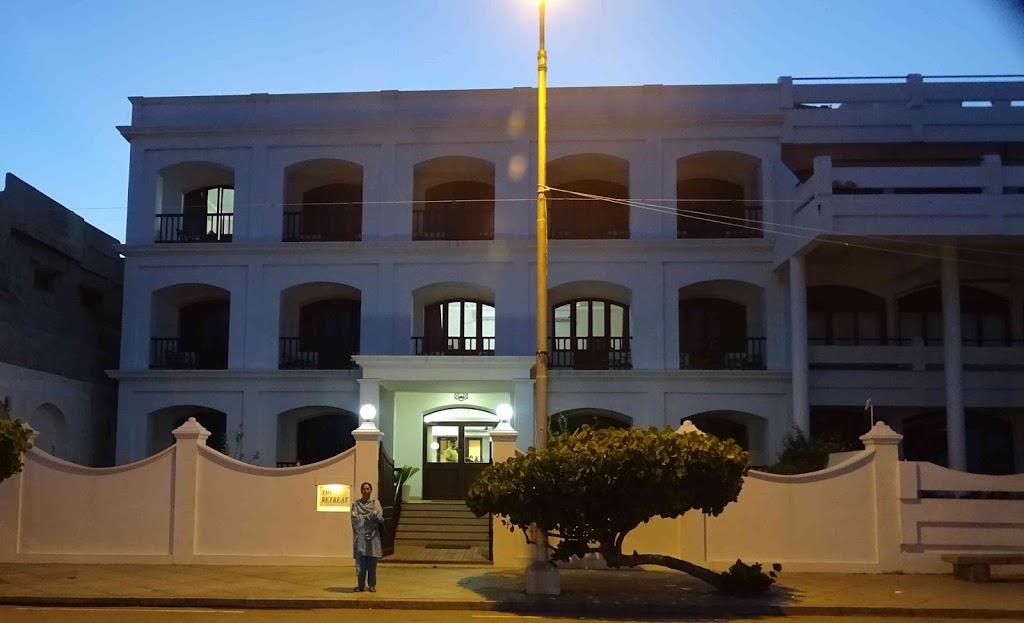
Best way to interact I found is to stay at “The Retreat” guest house. This place is at
 probably the best location in Pondicherry. Bang on the beach, just beside Secretariat. Backside of
 the guest house opens toward Roman Roller library. Most of the important place is within 5 min
of walk from there. SAS head-quarter is also in the same building.
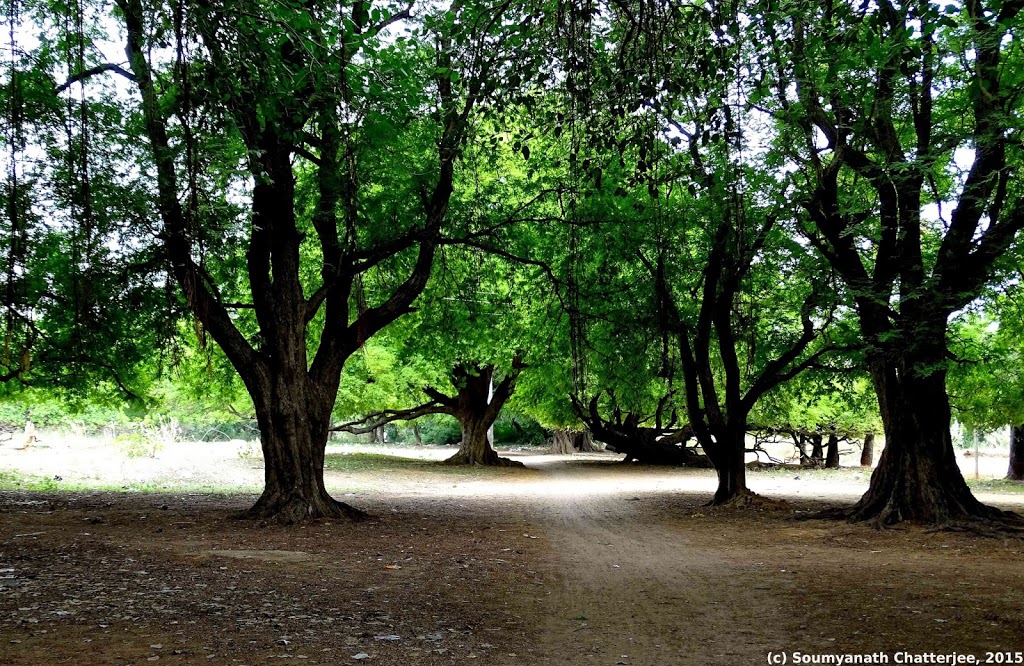
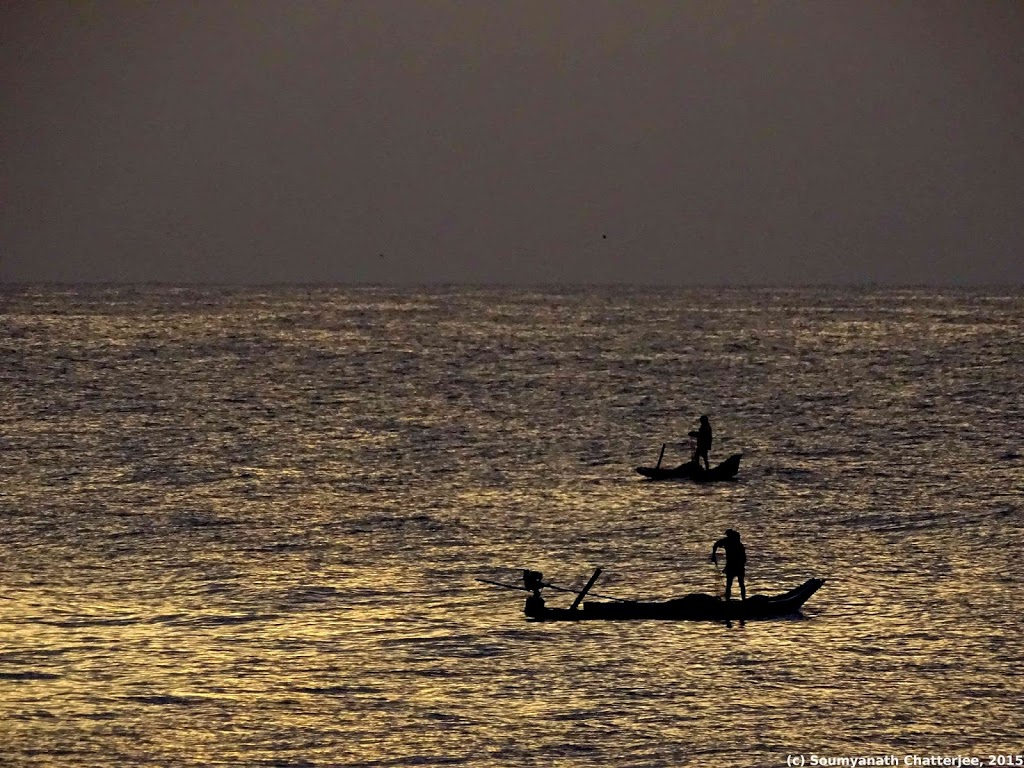
All the rooms in Retreat faces sea, one just needs to peep out for a fabulous sunrise picture.
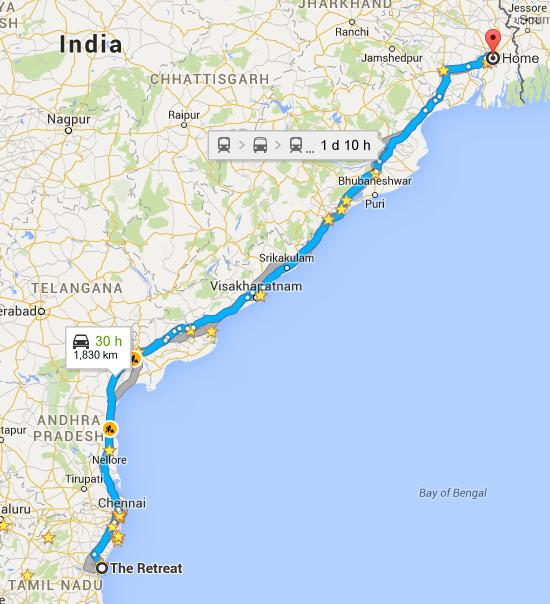
Puducherry to Kolkata is 1830 Km. Google claims it to be a 30 Hrs drive, but I decided to
keep the drive to approx 400 Km/day.  Before the return we also wanted to spend a day
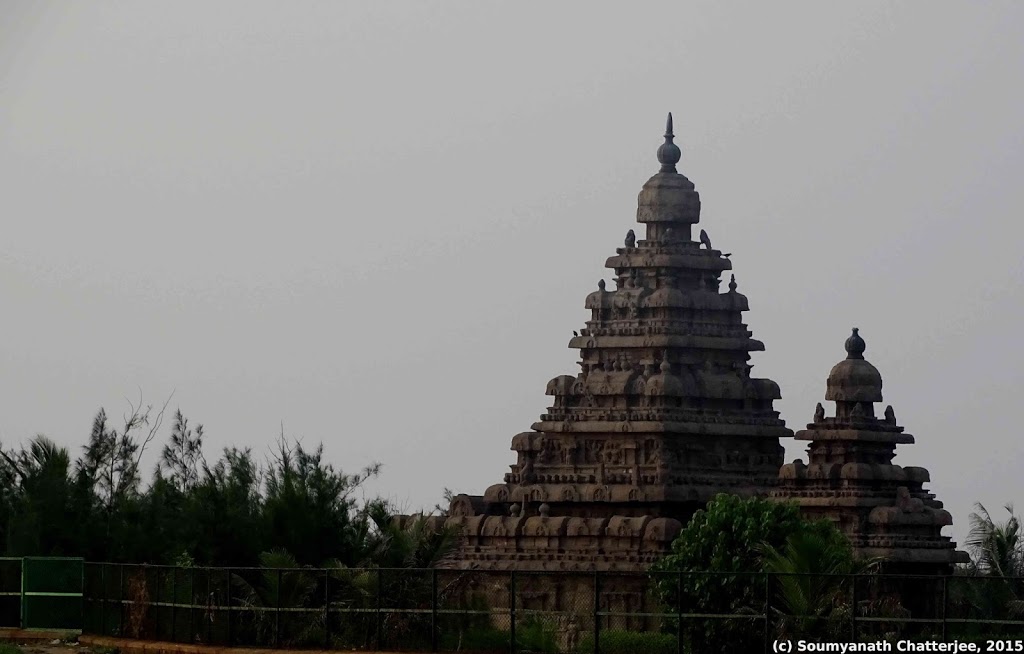
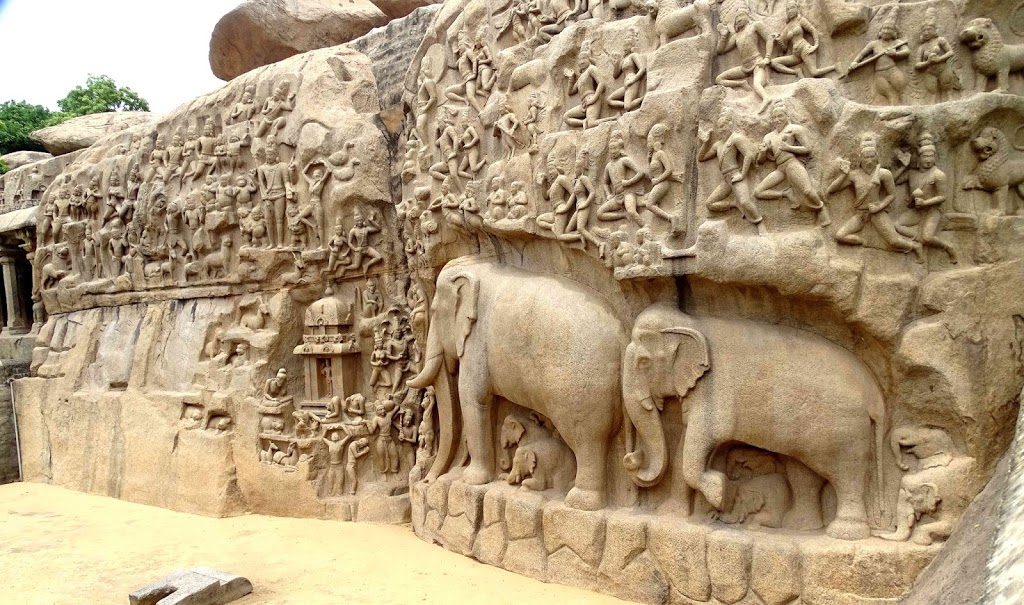
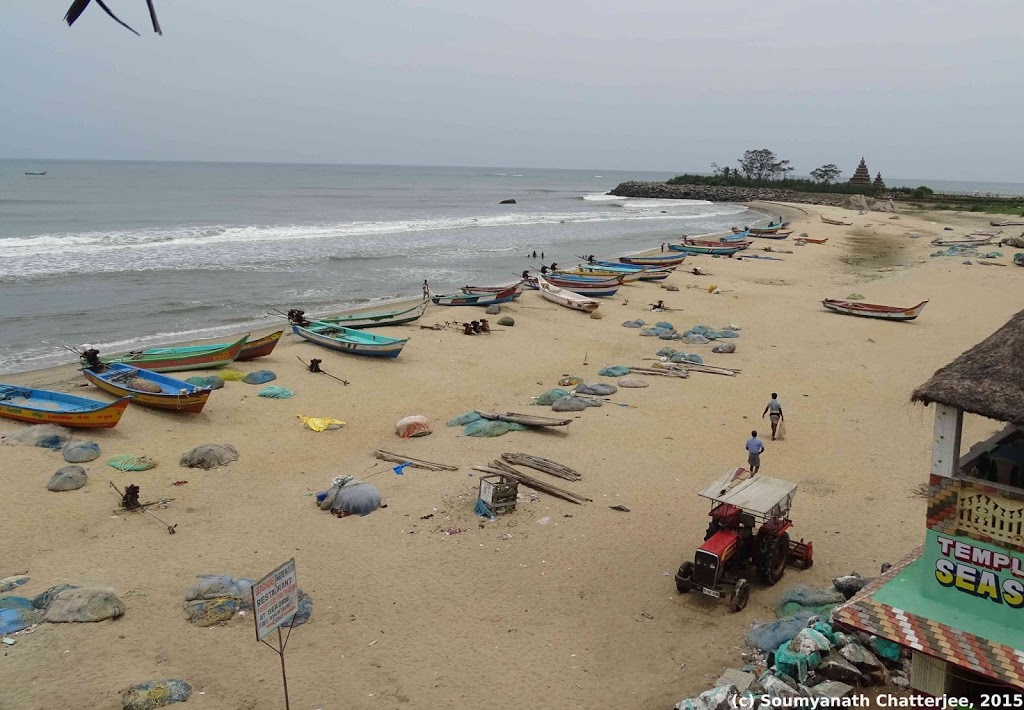
at Golden Sand beach of Mahabalipuram. Bay of Bengal is just great at Mahabalipuram.
One could easily imagine why it used to be the favorite spot for the sea traders.
There is a hotel just beside the shore temple, we decided to stay there.
The reason was mainly good access to beach.
Most tourist spots and main market is also quite near to shore temple
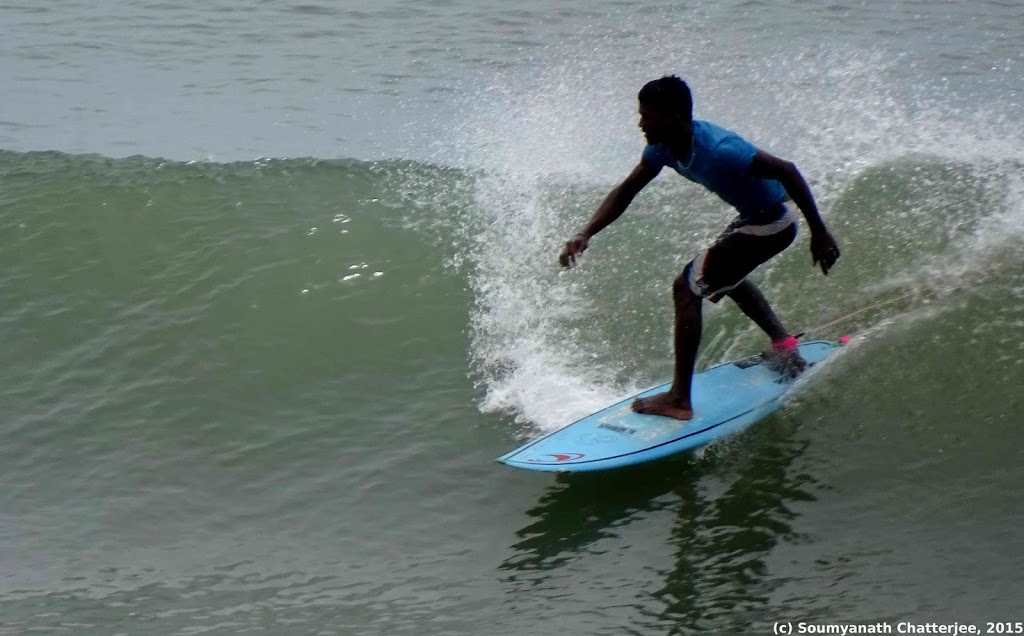
Mahabalipuram sea is also good for surfing. Wanted to explore if this will suit my current
 fitness level. After watching the process I gave up the thought of trying it.
This beautiful beach is littered with garbage. The experience would have been
pleasant if someone bothered to clean the beach.
Aug 28th is my son’s birthday. He is in Chennai. We planned to celebrate the day with him.
My friends from BHU, Venkat and Ranga paid us a visit at Hotel.
Venkat had a visit from prospective international customer and 
Ranga is trying to create some extra hours to supply massive orders 
that is in his hand. It was very nice of them to make time 
from their busy schedule for us.
Greta’s classmate Shampa and our ex-neighbour Madhumita also dropped in for a quick chat.
Mohan is my classmate from BHU. He was out of station on previous days. Joined us in breakfast before we left Chennai.
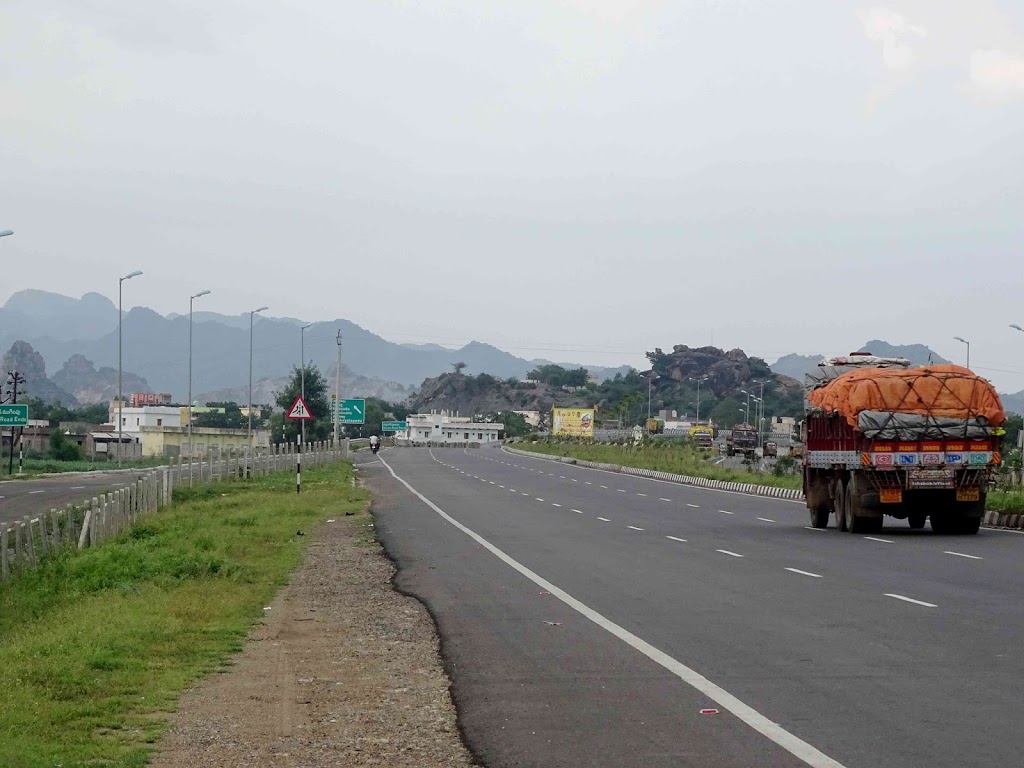
Our first stop was at Vijaywada. Road was good but it was a long drive.

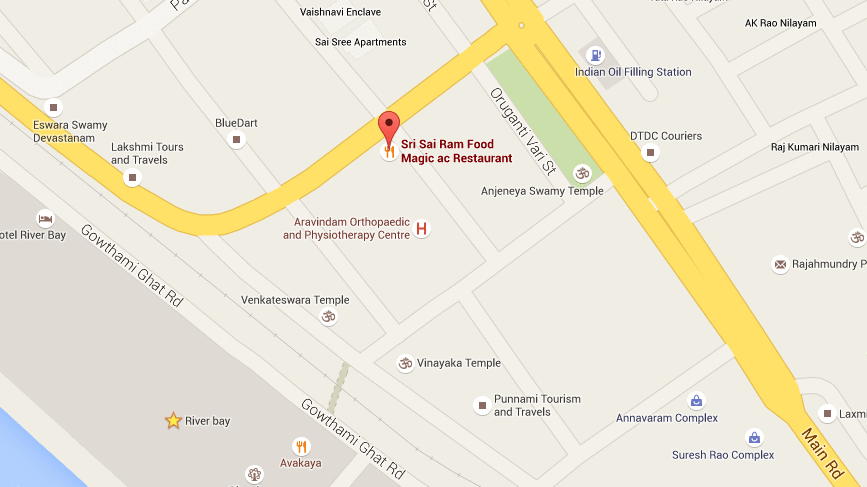
We discovered a nice restaurant at Rajahmundry – Mee Food Magic.
Good food, Amazing service – the place is being setup, ambiance was not so nice
but the behavior was like a good friend or close relative.
Loved having the food there.
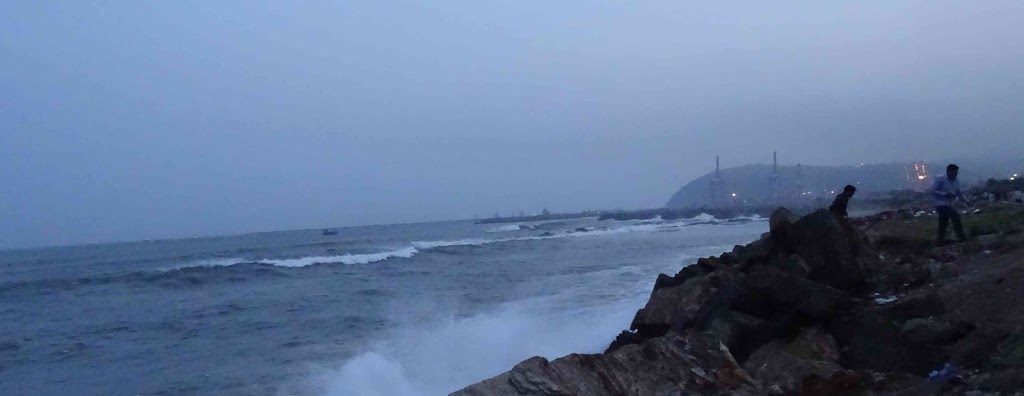
Next stop was at Vizag. Hotel was very near to port.
A Chinese bulker slowly making its entry.
God knows when we shall have more container carriers
instead of these bulkers. 
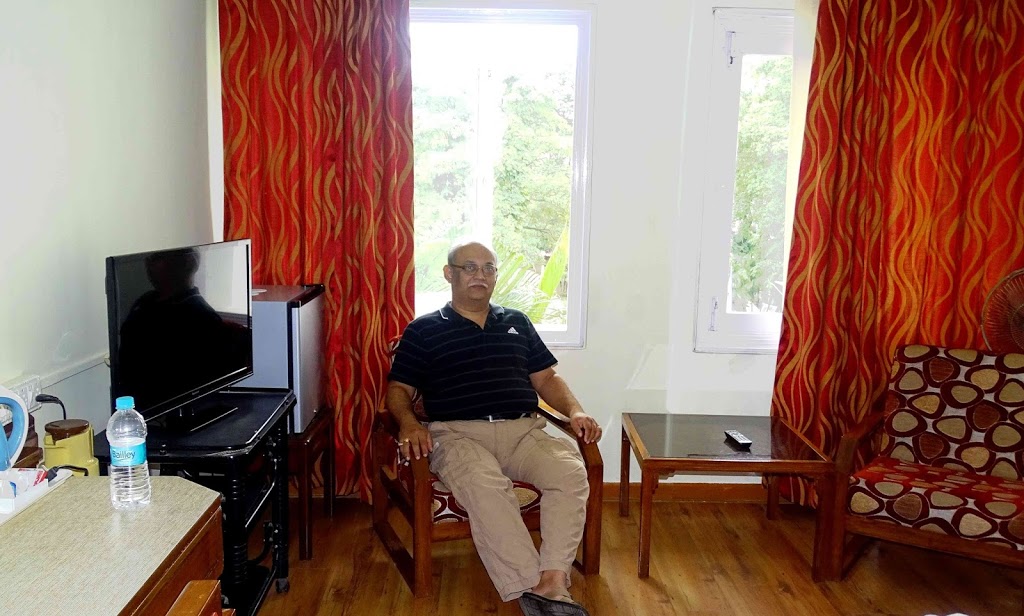
OTDC Kalinga gives a back to home feeling. The place is just 5 hrs drive from Kolkata. 
Posted in Art of living, My Life, Travel | Leave a comment

A month in Auroville

Auroville is in the border of Tamilnadu and Pondicherry. It is around 5 Km from beach, part of it is right beside the sea. Auroville is best known for its tourist attraction – Matrimandir, that looks like a golden globe. Auroville wants to be a universal town where men and women of all countries are able to live in peace and progressive harmony above all creeds, all politics and all nationalities. The purpose of Auroville is to realize human unity. Living in Auroville is a unique experience that is difficult to narrate in mere words.

I had been in Auroville earlier with a tourist mindset, this time we went with a mindset to live there. Biggest challenge in Auroville is to find a place to stay. There are number of guest houses but they do not give any information on rate or availability. We started off by writing directly to number of them. Most did not bother to reply, a few did. We picked one that promised to have most attractive value proposition. It is a place called New Creation, that runs a boarding school-cum-orphanage. The money we give goes to upkeep of the orphanage. Staying there gives a feel of tour with a flavor of philanthropy.

Auroville is made up of number of communities. New Creation Community was started with in view to give  ‘first Aurovilians’ (i.e. the local people present on the Auroville land) a bridging place where they slowly and gradually could become aware that Auroville is for all people of good will and that, if they are willing, they can become Aurovillians themselves. The best approach to that was to create an educational environment, like a primary school, boarding and sports facilities. In order to meet the financial needs to run an undertaking where everything is free, including a Primary school for 240 children and a school with 30 small kids in a new ‘Free Progress’ experiment, they have created some income generating activities such as guests facilities.  There are 16 double rooms and 4 single rooms, all mosquito-proof, with fans, attached bathrooms, and a guest dining room with filter water and kitchen. There is a gymnasium, a sport ground with volleyball, basketball, 2 tennis courts, a running track and a small swimming pool.

We stayed in a double room with kitchen. There were huge trees all around the place and a place to park my car. Our morning used to start with pleasant sounds of bird and squirrel chirping, down side was the bird droppings that had to be cleaned from my car. Bird dropping contains rather large amount of uric acid, that needs prompt attention. Probably some covering or canopy would have helped, but we did not bother much about it for our rather short month-long stay.

The rooms were with basic amenities. There are many architectural experiments that has its own pros and cons. Hexagonal shapes probably saved some bricks while covering larger area. But this poses problem with rectangular furniture. What is good for beehive does not necessarily good for human being. Traditional wisdom of keeping the floor level higher than ground and roof overhangs were missed out by the rookie architect. These resulted in some avoidable visits of wild life  and occasional dripping roof during heavy rain.  This goes to reinforce the strong design concept. That many local custom and practices are there for a good reason. One need to understand them before trying to do anything better. Painting in the room are done by the students of New Creation. Some of them really looked promising.

There is a story that says a wise Zen monk was given opportunity by God to the see both Heaven and Hell. ‘What are the differences between Heaven and Hell?’, a young Zen monk asked an aged Buddhist priest who was renowned for his wisdom.

‘There are no material differences,’ replied the old monk.

‘None at all?’ asked the puzzled young monk.

‘That’s right. Both Heaven and Hell have a spacious hall with a big pot in the center in which noodles are boiled, giving off a delicious scent,’ said the old priest. ‘The size of the huge pan, the number of people sitting around the pot and the bowl of sauce placed in front of each diner are the same in both places.’

‘The odd thing is that each diner is given a pair of meter-long chopsticks and must use them to eat the noodles.’

‘To eat the noodles, you must hold the chopsticks properly at their ends,’ the old monk told the young Zen monk.

‘In the case of Hell’s kitchen, people are always hungry because no matter how hard they try, they can’t get the noodles into their mouths,’ said the old priest.

‘But isn’t it the same case for the people in Heaven?’ the junior monk inquired.

‘No. They can eat because they each feed the person sitting opposite them at the table. That’s the difference between Heaven and Hell,’ explained the old monk.

Heaven and Hell is created by the neighbor you have. We were fortunate to have an exceptional family as neighbor – Ashish, Lopa and Ishan. They were very helpful and excellent friend. Lopa is a teacher of the “Experimental School”. Individually they are exceptionally good human being. It is wonderful experience to know them personally and understand their attitude towards life.

Entrance Road towards New Creation is littered with garbage tied to trees. These are offering to God fulfill various greed. As a reflection to the inner nature, the place looks ugly. Hope someday someone will look at the ugliness and pray for the good of everyone and restore the place to its natural beauty. Till such time the trees mutely carry the burden of human greed and folly.

Inside Auroville it is a mixed bag of people and their motives.  Much like the flower that bloomed in the New Creation Garden. Part of it is bright and colorful, part of it is rotten and ugly. It is a city, just like any other specimen of human habitat, perhaps here in a more cosmopolitan and concentrated manner. Future of mankind has to find a solution to the problem that our civilization now faces and come out with a answer. According to Shri Aurobindo this will be the New Creation, seed of this lies within the current human being.

As you go ahead from ECR road entrance after New Creation School and the tree with offerings you find a nice colorful temple. It is my observation that people of tama guna is attracted and motivated by fear, hatred and anger. This is typified in this temple – animals and punishing demigods are prominent, deity is hidden inside a rather small temple.

A little ahead you find the new temple of consumption – Tanto Restaurant. Tanto is a Pizzeria Chain run by a Italian gentleman Daniel. Daniel came to India for a tour and had fallen in love with the country. He missed his home food so started a Pizzaria. Slowly he started making cheese for his Pizzas and Pastas. Incidentally the spaghetti that he uses are made in his factory. Part of it are sold in outside. Tanto is a beautiful case of backward and forward expansion. He has been in business for around 10 yrs and already having a turnover of around Rs. 20 million/yr.  He has 3 restaurants in Pondicherry and contemplating of opening in other cities. Considering he started his business without any kind of capital this is really impressive.

Beyond Tanto, you see a couple of small shops and hotels and then what you find is a road to nowhere. That is what Aurovillians call the road that cuts across Auroville. Perhaps the road typifies the current situation in Auroville.

When Mother was there she gave the goals to Aurovillians. It was her wisdom to plant trees on what was once a barren land. She also gave the direction to build the beautiful Matrimandir.  Aurovillians took her command unquestioningly and executed it meticulously. What we see in Auroville is the result of that Karmayoga – work done without any consideration of result and reward.

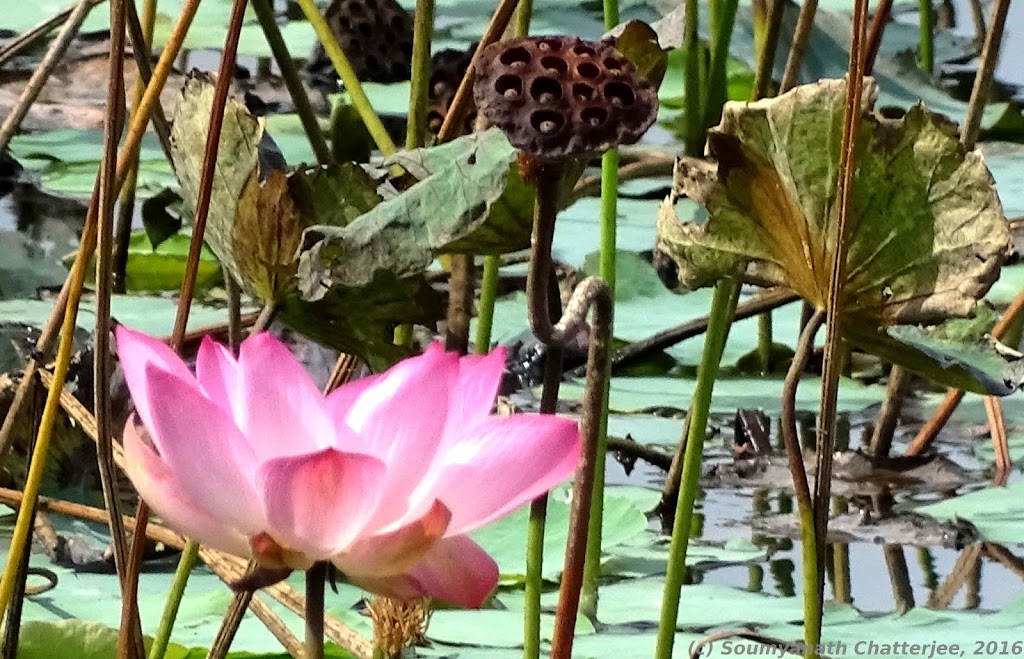
Greenery around Auroville is as much commendable as the Matrimandir that most tourists make a bee-line to see. They see the gold foil dome and most leave thinking it to be a golden globe. Only few tourist bothers to visit Matrimandir for concentration. Greenery and Matrimandir is like some scenery that you see beside this nowhere road.  Some units like Tanto, Aureka, Earth Institute, Maroma are like this lotus. If you care to look at them, they are beautiful at their own right. Lotus and Marshes are all part of nature, one cannot have one without the other. But like the road, Auroville lacks a greater common purpose. Mother is not here anymore in person to guide the community towards its goal of new creation. In this confusion, each pursues their own objective. Like a colony of ant, each pulls Auroville towards its direction of RIGHT, at the end it does not seem to move anywhere.

Life in Auroville is anything but boring. There are cultural shows. Many young foreigners uses Auroville as springboard for entry to India. Auroville has a special VISA status and some special property act. By this act a foreigner can work in Auroville without getting an Indian Work Permit. Many use this status to showcase their talent, get local press coverage and taste their acceptance before applying for work permit. Many will give training from within Auroville rather than spending their effort and money for Indian work permit. Here you see a Japanese performer, Yuhei Motoyama, giving Taiko performance.  This event is sponsored by Japan Airlines and Japan Foundation.

Apart from special performances there are movie shows, cultural fests that dots the social life of Auroville. Everybody is welcome to these shows and participation is the keyword. Focus is to keep the events simple that involves most people. It also gives people a platform to showcase their talent, get some reality check and provide necessary training ground.

Here you see capoeira performance being given by Aurovilleans. Auroville promotes capoeira for its use in self defense.  It an art that evolved in Brazil in order to ward off colonials. It is characterized by its fast and fluid movement, in the form of dance. Aim is to maim the attacker with minimal contact.

Auroville has some sandy beach. Unfortunately these are used by local fishermen to dry their fish. There are two beach guesthouses – Sreema (Tanto) and Repos. The stench  can be overwhelming at times, but other than that, the beach is good. It is unfortunate that there is no alternative to offer that will take care of the stench other than a conflict between tourist attraction and fishermen’s livelihood.

Some people are not bothered of the stench and prefer to live there. The beach remains sparely populated with this olfactory deterrence.

To get a flavor of city life one can visit Puduchery. It is about 10 Km from Auroville. Beach front is closed to traffic between 6:00 PM – 6:00 AM and resembles a mela.


At Le Cafe one can enjoy some fine coffee and sea breeze.

For a taste of French life, Pomande Resturant is a good choice.  Sitting there one could enjoy the sunny beach from the comfort of an air conditioner.

Our daughter, Sukanya came down from Pune to celebrate her birthday with us.  Being in Auroville we could enjoy both the city life and the life of a quite laid back town.

Pondicherry has a rather magnificent university for its size. As a bonus our friends daughter, Purva is studying there. Met her after a gap of 10 yrs. It felt as if we had a time travel of 10 yrs past.

Being in New Creation we grabbed the opportunity to celebrate our daughter’s birthday with the school kids. Evening was a party time with the kids. The community head (Steward – as he is called in Aurovillian lingo) Andre, joined us to grace the occasion.

The road to nowhere takes you from one highway to another. If you follow the beaten down metaled road and the road signs, you will miss the Auroville altogether. Here is a road that goes inside Auroville. Road signs are for visitors to take them to a car park. Unmetaled red road is the main road to get inside Auroville. The security guard standing there is to stop any car from entering the sacred road. One needs special permission and a sticker to enter Auroville with a car. That sticker is available from a office located at the center of Auroville. Just like this road, Auroville has excelled in wrapping itself in many Catch-22 rules and processes. One can spend their lifetime in getting to understand them.

Once inside, you are greeted with red road, complete with proper drainage. Auroville is gifted with people who knows their job, unlike current bunch of city planner that are scourge of most Indian cities. Our present city planners make roads without proper drainage that in turn make the city resemble Venice during every monsoon.

Auroville has a master plan that resembles like a galaxy.  Current development has been rather haphazard which was more driven by opportunity rather than plan. Currently Auroville is trying to consolidate according to the city planned under Mother’s guidance.  Auroville is supposed to be a city of 50,000 people. Given the attitude and current composition this looks to be a long journey. Currently there are only 2500 odd Aurovillean, locals seem not very keen to join the team and current bunch of Aurovilleans do not seem too keen towards that end.

There is a circular road that is supposed to run around the main facilities. This road has been paved with compressed earth blocks. Part of it remains incomplete due to land acquisition issues. The road looks rather narrow for a city that will have 50000 people.  Maybe city planner take a serious look and give due consideration for future.

Shri Aurobindo and Mother always advised for community kitchen. They wanted people to give less thought on food and channelize their mind and energy for other work. Solar kitchen takes this idea one step ahead with sustainable community cooking.  It derives its name from the big Solar Bowl on its roof, which provides part of the steam for cooking on all the sunny days of the year. The other part of the steam needed, is provided by a diesel fired boiler. Throughout the year approximately 1000 lunches are prepared daily, of which 540 go to the schools, 200 go out by tiffins and 260 to 300 are consumed in the Dining Hall. It uses vegetables and grains grown organically in and around Auroville. There is a choice between western items like pasta, mashed potato or fresh salads and items like idli, dal or chutneys. Daily curd and freshly made juices are available.

Just beside solar kitchen there is Auroville Super Market – Pour Tous Distribution Center.  This supplies all daily necessities of Aurovilleans. One has a choice of taking food from PTDC instead of Solar Kitchen. PTDC offers more variety like Sushi, Muffins, Steamed Vegetables and such thing. A typical lunch cost around Rs. 70/- at PTDC. Actually, it is not proper to talk about money in PTDC. Long term guests and new comers pay a monetory contribution commensurate with their consumption. For Aurovillean the service is kind of free. Circulation of money is discouraged within Auroville. Money is a powerful instrument that is essentially tamasic in nature. PTDC is created as an experiment to curb unnecessary buying habit. If a particular Aurovillean consumes more than average. He/She is given feedback to restrict their consumption.

On the same circular road and slightly away from solar kitchen there is Auroville library. This library has a fantastic collection of books on Sustainable living, alternate economy, religion and spiritual philosophy. Apart from “serious” books, it also has a good collection of fiction. It contains more than 30,000 volumes in eight languages – English, French, Italian, Spanish, German, Dutch, Russian and Tamil.

Auroville has number of industries thriving under its fold. Spirulina cultivation is one such unit. It sells its product under the brand name of Aurospirul.

There are some typical incense stick, decorative candle and paper product making units. It also had a thriving dress making industry that came up with a unique combination of European and Indian  styles. Most of these are now closing from the copy-cat competition from Pondy.

When you go to visitor center you will hear this large wind gong. This is made at Swaram – an shop that makes musical instruments for Auroville.

Talking about Visitor Center will be incomplete without a reference to its rather uniqui building material. The bricks that you see are not ordinary fired brick. Entire Visitor center is made of Compressed Stabilized Earthen Blocks (CSEB). CSEB is a environment friendly technology that used local soil to produce bricks without using coal or fire wood.

Auroville Earth Institute is one of the center of excellence in promoting use of such material.

There is a machining and fabrication shop Aureka that makes machinery for these earthen block. Current machines are manually operated hand pressed or semi-automatic hydraulic ones. It is working on a fully automatic block making press. I was working on its controller. You see here the machine being prepared for full scale trial.

Initial phase of Aurovilleans who came was given a rather large piece of barren land where even a blade of grass did not grow. They toiled and turned the place full of trees. As result of their hard labor water level of the area has risen and the place has become fertile. In this empty land, initial settlers built large mansion for themselves which is not sustainable for a city of 50000 population. Initial settlers feel entitled to a life of comfort, commensurate to the work they did in Auroville or else where. Current houses for the newcomers that you see in the picture are being built in the style of multi-storied flat. Availability of large supply of low-paid workers from nearby villages help to sustain the colonial lifestyle. There is a latent resistance among these Aurovilleans to let go of the comfort, help to raise living standard of the local population and assimilate them within the fold of Auroville.  There is equal reluctance from the locals to let go of money, inheretance and freedom to work anywhere. There is no clear solution that will be acceptable to both. Ideal solution would be where people live like family members, share the resources equally and work together for betterment of everyone. Such thing are easier said than executed in practice. Perhaps some divine intervention is store for the big change to happen. What is true for Auroville is true for rest of the civilization. World is poised for a divine intervention only its time may not have come.

Coming to Divinity, one gets reminded of Siva – lord of destruction that paves way to New Creation. The place is full of Akanda flower(Calotropis gigantea), the flower of Siva. I could not stop myself from sharing a picture here.

 Perhaps as reflection to our mood a close specimen from nearby species choose to visit our place. You can see the tension in its face. Watching carefully from a distance about the happenings below.

It clearly did not like what it saw. Certain amount of aggression is visible. That is a typical animal instinct that is still prevalent even with us.

But it proved to be a wise monkey. I would say it understands aggression is not the best practice. Something we homo sapiens often forget. It choose diplomatic display of displeasure instead of proceeding with raw aggression.

Like a wise animal afterwards it went to mind its own business completely ignoring the surrounding. There is no fun in trying to change everyone all change begins with himself.

Decisions are always difficult to make. Some decisions are liner, they make incremental change and the effect is reversible. Some decisions are catastrophic. Once taken, these catastrophic decisions dictate future course of actions. There is no way to retract and go back from where you have started in catastrophic decision. Most decisions that affect life in real sense are such catastrophic decisions.

These are like these delicate droplets on a lotus leaf. They look apparently stable but a small ripple will make the drop running either towards the center or towards the edge. Once it moves, there is no way to stop it.  Perhaps this is the reason, people postpones making the move and clings on the tested belief and ideology, fully knowing time has come to get rid of these and move on. It is a classic example of tamasik feedback loop. Where inaction is caused by fear, uncertainty and doubt. It is this inaction that fuels degradation and chaos. This chaos further strengthen the grip of fear and uncertainty.  Way out of this downward trend is rajasik force. Rajasik force driven mainly by hope and greed. Current civilization is now standing at a cross road where the cycle of greed has encompassed every thing and do not motivate people for doing things that are good for others. Need of the hour is Rajarshis. Persons who are able and motivated to work without looking for reward.  Auroville was formed to incubate such Rajarshis. Current civilization needs such people, dedicated souls who work for their own passion and not for reward. Auroville has such people, but the number is certainly not higher than what is visible in rest of the society. Auroville does not have an environment that will attract other like minded Rajarshis to migrate and assimilate with Auroville. It  has some individuals striving for it, but the task looks beyond the capacity of human effort. Maybe some divine force will pave way for such change.

Posted in Art of living, Auroville, My Life, Philosophy, Religion, Travel, Unity | Leave a comment

Legend of Irumbai and Sadhana Forest

When  you travel Pondicherry from Chenni or Bangalore via NH 66, you will cross a place called Irumbai, which is around 6km ahead of Auroville. Irumbai is famous for its temples which were built around AD 1000 – 1500. Irumbai has an interesting legend of Kaduveli Siddhar, a famous yogi who lived in the area some four to five hundred years ago.

According to the legend, Kaduveli Siddha was performing harsh (hatha) yoga under a peepal tree for days. The heat of his body was so intense that no rains came and the people were exposed to hardship and drought. The situation was so bad that it finally came to the ears of the King, who ruled from Edyanchavadi village. No one dared to disturb Kaduveli in his penance as he chanted the mantra of Eswara, and soon an anthill started to rise up around him. Finally a temple dancer, named Valli, devoted to the Lord Shiva, decided to do her best to get the attention of the yogi, and to rescue the King and his people from the adverse effects of his tapasya. Valli was successful in transforming the Yogi to a family man. Meanwhile the God of Rain was relieved from the torture he felt from the heat of the yogi’s tapasya, the rain fell in plenty, and the people were happy once again. In order to celebrate this event the King ordered a big Puja to be held at Irumbai temple, which was to be followed by a classical performance by Valli in which she would act out the cosmic dance of Lord Shiva, in the form of Nataraja. During the performance, however, one of her anklets fell off, and she started to lose her balance and rhythm. Kaduveli, who saw the Lord Shiva in Valli, picked up the anklet and put it back on her feet. This exposed him to the ridicule of the King and court for having touched the feet of a dancing girl, and he was heckled and jeered. In the rage he invoked the Lord Shiva to come out of his temple and prove his innocence by causing a rain of stone. Immediately the lingam in the sanctum sanctorum of the temple exploded, and wherever its fragments fell became desert. No greenery will grow around these spots, including a crater at a distance of three kilometres from the village, still to this day known as “Kaduveli”. The King got frightened and begged the pardon of the Siddha, bowing down to him with all his entourage and pleading with him to quench the effects of his anger and curse. This appeased Kaduveli, who, repenting of his anger, said that what was done was done, but that in the future, people from far-off lands would come and make the desert land green and fertile again.

It is strange this peace of land was lying there for all these years with lunar landscape till two great souls, Yorit and Aviram Rozin started their reforestation work around year 2003 on 70 acre of arid, eroded land in the outskirts of Auroville. The land resembled Martian landscape with red soil, where not even a blade of grass was visible. Here is a picture taken in 2004 from Sadhana Forest archive that will give you some idea of what it looked like.

Yorit and Aviram was not the first person who tried to rejuvenate this place of land. Some one thought the place looks like African Savana and tried to plant Acacia. They hired a plane and seed bombed the place. Acacia seeds are hard to germinate, in the arid land these seeds were just wasted and were lying dormant for years.  Yorit and Aviram started their work with focus on restricting land erosion and water conservation.  Acacia is a hardy plant that can survive in near desert condition. For the same reason Acacia is also known to be a potentially invasive species, which is taking over grasslands and abandoned agricultural areas worldwide, especially in moderate coastal and island regions where mild climate promotes its spread. Australian/New Zealand Weed Risk Assessment gives it a “high risk, score of 15” rating and it is considered one of the world’s 100 most invasive species. Extensive ecological studies should be performed before further introduction of acacia varieties, as this fast-growing genus, once introduced, spreads fast and is extremely difficult to eradicate.  Some species of Acacia contain cyanogenic glycosides, which, if exposed to an enzyme which specifically splits glycosides, can release hydrogen cyanide in the “leaves”. This sometimes results in the poisoning death of livestock. It is not clear, even to the current volunteers of Sadhana forest on what ecological impact assessment was performed by Govt. or by the people involved before this alien species from Africa was allowed to be planted in such large quantities in this part of the world which does not have the bugs and other plant species that can resist its invasion and live with Acacia symbiotically.

Sadhana forest team has decided to live in the forest.  They take it more as a social issue rather than a technical issue. They live with the trees and rest of the inhabitants of the forest. As a society and in harmony with nature. The idea is to feel and discover the problem forest faces and solve these on the go.  Sadhana forest team organizes regular trip to the forest on Fridays. The idea is to educate people about conservation and living harmoniously with nature. The trip starts with toilet training. At Sadhana forest they use dry composting pits for toilet. Here our pre-tour guide Shiva is explaining us on how to use the toilet. Dry composting pit use very little water. This is very important for villages (and cities) with water shortage.

We aim for toilet for every house hold. Some of the villager has to walk kilometers to fetch a bucket of water. If we ask people to use this bucket of water to flush shit, then the idea of toilet for each home also goes down that drain. For those area where water is scarce, we need toilet that use very small amount of water. At Sadhana forest they use 1 liter of water for shit. The WC that we use normally is put on alternate usage.

For washing dishes they use ash and organic soap. Any left over food goes to composting pit. Dish is dip washed in four tub.

One may tend to question the need for subjecting oneself to this hardship. I think the idea is to develop that keep sense of scarcity of water in the mind of every volunteer so that they are in tune with the problem being faced by the trees.

As we walk down the narrow forest trail, we are stumped by speed breakers. These are quite big and we were wondering which municipality has planned them.  Very soon we came to know the speed breakers are meant not for us, it is basically meant for rain water. As rain water flows it gets restricted by these breakers and reduces the run-off.  The team uses various types of technique to ensure the water that falls on ground is retained with the forest.

There are two ponds in the forest to retain the retain water

These ponds hold water during monsoon. This helps to keep ground water level high during dry spell.

Here is a bund created to retain the water within soil and reduce runoff.

Here another voluenteer and current director of the Indian project explaining the water conservation measures to tourists.

To plan trees they have come with a innovative technique of drip irrigation. Drip irrigation sounds good, but when you try to practice it on 70 acre of land with not so obvious economic benefit the idea looks daunting. They use these plastic bottles with a wick to bottle feed the baby plants. These are required till the root reaches ground water and the tree is able to survive on its own.

Beside water consumption they also practice eco-friendly method of cooking. The stoves here are rocket stoves that burn wood very efficiently and without smoke. Just one small log of 1 inch dia is enough to prepare food for 20 odd people with these stoves

Roofing sheet that we saw is made of compressed polythene/plastic junk.

The picture on the left may look very familiar to people from Africa. Let me assure you, this is what Sadhana forest looks currently.

With all the water conservation measures working and some trees tended with baby sitting care, the piece of land is now ready for life. The Acacia seeds that were air dropped earlier are now sprouting every where.

 The place looks like Africa with this thick Acacia cover.  Sadhana forest team has decided to take advantage of the situation as it unfolds.  The trees provide much needed bio-mass and water retention capacity. That help other trees to grow at present.   The team is aware of the danger that an alien species may pose. Acacia do not fare well with storm that is very frequent in this coastal region.  Currently the plan with Acacia is to take advantage of what is available but plant more trees that are of local origin. There is bound to be some trouble in cohabiting with an aggressive species like Acacia this drama of life and yoga will unfold layer by layer as the team passes through different phases.

Here you see two fully local people that’s me and my wife – Courtesy a fellow traveler from UK, who was kind enough to click the shot.

Here we are in the auditorium-cum-living quarter of Sadhana forest enjoying a dinner served by the Sadhana forest team.  This big hut is made of bamboo and palm leaves. Lights are powered by solar cells. There is no fan, but we realized it after a long time. With natural ventilation from these tall roof fans are not required.

This goes to show simple life is not necessarily full of hardships, all we need to do is to question what is important for us in life and what is not. There is a urgent need to Value Engineer our life style to reduce the environmental cost of our life style. We may find that it is still possible to live harmoniously with nature that will sustain our lifestyle. If such life style is sself sustaining, we may need to ponder the need of such luxury.  While in Sadhana we saw a film titled “No Impact Man“, based on a book by Colin Beavan. This is about a family that changes their lifestyle to get zero carbon footprint over an year, while living in Newyork.  While I do not fully subscribe to the asutre lifestyle being projected and suggested, I do think there is a need to rethink and apply our innovation to reduce our carbon foot print. Sadhana team has been able to reverse it all together, my good wishes for them in their journey, but this is a social issue that require a bit of effort from each of us.

Posted in Art of living, Auroville, Environment, My Life, right technology | 5 Comments

Automating Building Manufacture

At Auroville I took the work on automating their CSEB manufacturing machine – Auram 6000. Compressed Stabilized Earthen Blocks are fast becoming popular for their obvious benefits. These blocks have superior thermal insulation than concrete. With proper design, they compare well with Concrete on earthquake tolerance. These are normally made from locally available material, thus reducing transportation cost. Curing time for earthen block is low.  As these blocks have better dimensional accuracy, it is possible to use these blocks without using mortar. These help to improve productivity and at the same time is the technology is friendly to environment.

Aureka makes manual and semi-automatic CEB presses. These can make around 65 types of normal and specialized  bricks. It has now come with fully automatic machine that will be able to produce around 500 full size (1′ x 1′) blocks in a hour. An average size 2500 Sq.ft building will normally require 15000 blocks. Automatic CEB machine can produce these bricks in 30 Hrs. At this rate CEB will rival the construction speed of concrete. In order to use mortar-less construction the blocks need to be within +/- 1 mm accuracy. Molding sand and soil to this level accuracy proved to be a challenge.

In this machine I am using PIC 16f4877a microcontroller to control the hydraulics. Micro-controller helps to automate movement of different rams. These speeds up the process and relives the operator from monotonous lever shifting work.  First day when we tried, the operator pointed out that for some specialized blocks, machine needs to be stopped at a certain stage for manual intervention. So I had to modify the microcontroller program. Next we tried a small sample batch. Position variations were very high. I noticed that the sensors were placed in a manner that is responds to change in position quite slowly. Oriented sensor positions to improve the sensitivity issue. Next issue was the problem of inertia in the control circuit. As sensor detects position, it responds by closing a relay in hydraulic. How much the ram will travel after receiving stop signal depends on:

  1. Response time of solenoid
  2. Viscosity of oil
  3. Plasticity of soil

These three variables depend on ambient temperature, humidity, condition of machine, amount of water added in soil. In simple words, it is impossible to control the inputs to provide consistent output purely on sensor feedback. Solution was to introduce some physical limiters at vantage points. This CEB press operates at around 100 bar pressure. In these pressures it is quite easy to damage structures unless proper design precautions are taken. These physical limiter, in turn required  modifications in the structure. After taking care of all these, machine started producing blocks with proper dimensional control. Here you see the trial run on the prototype setup.

With 65 different types of blocks to produce, next challenge was to find a convenient process to set the block height and mold depth. Each block require different setting. Sometime setting may need to be changed to take care of type of soil being pressed. For this I found it best to consult the person who will actually do the setting. After some brainstorming we settled on a process that is easy to use in field with minimal equipment. The process was documented.

Next stage was to take the machine for a full scale trial. CEB press works with auxiliary equipment –  crusher is used to break solid lumps of soil and dry mixture is used to mix sand and cement uniformly with the soil. These are required to feed CEB press at its required speed.  Here you see the full setup for production trial.

Posted in Auroville, automation, Electronics, My Life | Leave a comment